BLOG CATEGORIES

scca

  1. A Front-Mount for the 2015 STi, Part 4: Final Prototype Fitting

    A Front-Mount for the 2015 STi, Part 4: Final Prototype Fitting

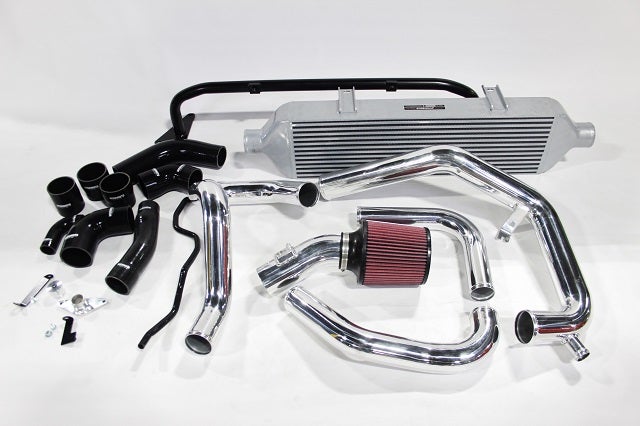
    Putting together our final prototype was a bit easier for this project compared to other front-mount intercooler (FMIC) kits our team has developed. As mentioned in previous segments, we used the crash beam and intercooler from our 2015 WRX kit. Now we've worked up some functional prototype piping for a final test fit.

    First, let's take a quick look at each portion of the kit.

    Intercooler and Crash Beam

    The intercooler core is the key component in any intercooler kit. This core has provided significant air temperature drops during our testing on the WRX, and we expect the same results with the STi.
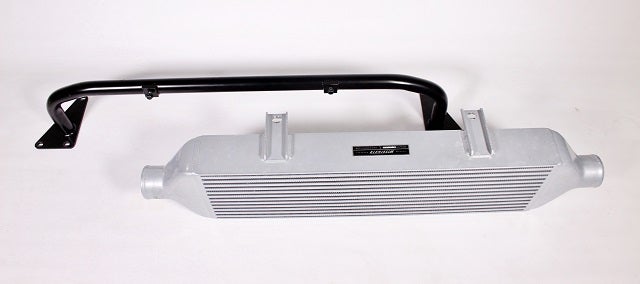
    Mishimoto STi intercooler and crash beam
    Mishimoto STi intercooler and crash beam
    Mishimoto STi intercooler and crash beam
    Mishimoto STi intercooler and crash beam
    This core was engineered to provide an ideal balance between heat transfer and airflow.

    Silicone Components

    Mishimoto 2015 STi front-mount intercooler silicone hoses
    Mishimoto 2015 STi front-mount intercooler silicone hoses

    Kit Accessories

    A few brackets and some hardware help piece this kit together for a solid, durable installation. We are also including a BPV (bypass

    Continue Reading »
  2. A Front-Mount for the 2015 STI, Part 3: Hot-Side Intercooler Pipe Fabrication

    A Front-Mount for the 2015 STI, Part 3: Hot-Side Intercooler Pipe Fabrication

    With our cold-side piping complete, it was time to focus on the hot side. This portion of the piping system would require a bit more attention, mainly because we were unable to scavenge any existing pipes from our WRX/STI front-mount intercooler kits (as we did with the cold side). Let's get to it!

    Piping Fabrication

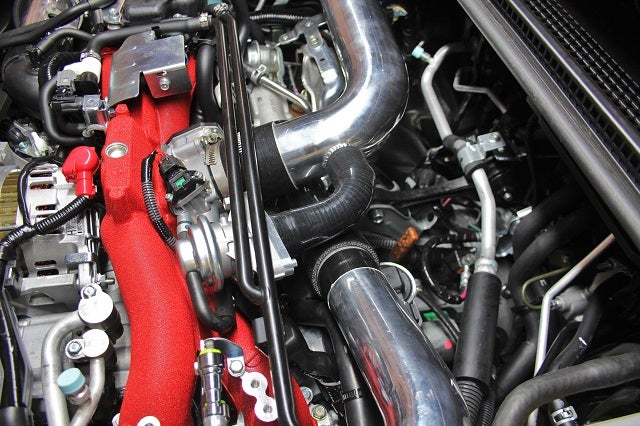
    The hot-side piping will route from the turbocharger compressor outlet, around the driver side of the engine bay, and into the front bumper area to attach to the intercooler.

    Here is a look at the turbocharger connection point.

    2015 STi front-mount intercooler hot-side pipe turbo connection
    2015 STi front-mount intercooler hot-side pipe turbo connection

    A coupler attaches the pipe to the turbocharger.

    The end of this pipe must attach to our intercooler, which is mounted within the front bumper area. This requires snaking the piping through the engine bay and locating an ideal spot for the piping to travel outside of the engine compartment.

    2015 STi Intercooler pipe connection
    2015 STi Intercooler pipe connection

    We should have no issues routing our pipe between the washer

    Continue Reading »
  3. A Front-Mount for the 2015 STI, Part 2: Cold-Side Intercooler Pipe Fabrication

    A Front-Mount for the 2015 STI, Part 2: Cold-Side Intercooler Pipe Fabrication

    Our first segment of this STI intercooler project involved the test fitting of our WRX crash beam and intercooler core. We were able to verify fitment of both pieces, which allowed our team to move on to piping fabrication. We are starting this kit with the cold-side pipe, which we've decided to place this on the passenger side of the engine bay to reduce the piping length as much as possible. Following this strategy should help reduce lag seen by the driver.

    Pipe Fabrication

    The cold-side pipe is a great place to start because we are able to use a portion of one of our existing kits. Because the 2015 model shares the EJ from the 2008+, we will be reusing the pipe that attaches to the throttle body and incorporates the BPV (bypass valve).

    2015 STI front-mount intercooler development
    2015 STI front-mount intercooler development

    This pipe provides optimal clearance through its path within the engine bay. It routes from the throttle body into the portion of the engine bay that previously contained the intake airbox.

    2015 STI front-mount intercooler development
    2015 STI front-mount
    Continue Reading »
  4. Power through Deletion. 2015 WRX TGV Delete Kit, Part 4: Product Testing

    Power through Deletion. 2015 WRX TGV Delete Kit, Part 4: Product Testing

    We've got some interesting plans to evaluate the performance benefits of our TGV delete kit. In addition, we want to evaluate any appreciable differences in terms of air temperature between the two materials (aluminum and Delrin) we have selected for our prototypes.

    Test Preparation

    For our first assessment, we will evaluate airflow temperatures in both materials during dyno testing. The goal here is to determine whether the different heat transfer properties of the two materials have an impact on the airflow within the TGV unit. Ideally we would use pre-TGV and post-TGV sensors to evaluate this, but for our initial test a single sensor will be used.

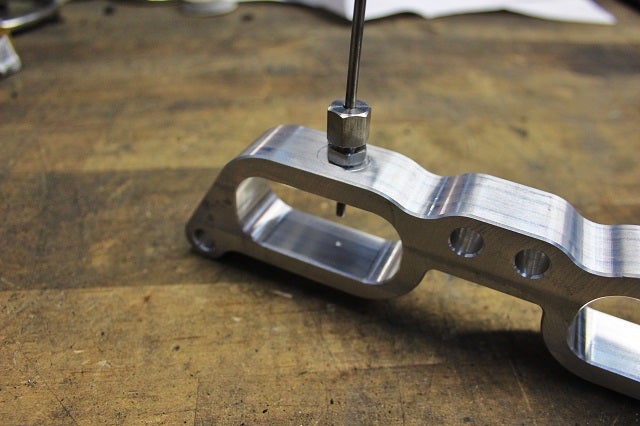
    We started by drilling and tapping each prototype.

    Initial Data

    We put together several plots to help analyze the data from our dyno pulls so we could reach a conclusion regarding appreciable temperature differences. First, a look at our initial runs with each material on both banks of the engine.

    2015 WRX parts testing data
    2015 WRX parts testing data


    The top-level data

    Continue Reading »
  5. Power through Deletion. 2015 WRX TGV Delete Kit, Part 3: First Prototypes

    Power through Deletion. 2015 WRX TGV Delete Kit, Part 3: First Prototypes

    We're back with another quick update on our TGV delete project for the 2015+ WRX. After designing our initial models and then 3D-printing a prototype for test fitting, we worked up a couple functional prototypes for on-car testing.

    First Prototype Images

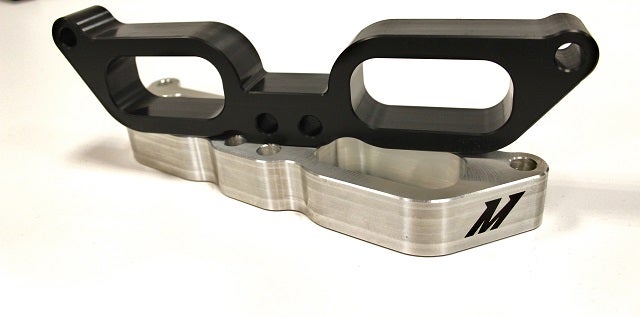
    Check out a few images of our functional prototype deletes!

    Mishimoto's 2015 WRX TGV delete prototypes

    Mishimoto's 2015 WRX TGV delete prototypes

    Mishimoto's 2015 WRX TGV delete prototypes

    Mishimoto's 2015 WRX TGV delete prototypes

    As you can see, we have two different prototypes. Although the shape and design are the same, these prototypes are composed of different materials. The polished unit is a CNC-machined aluminum piece. The black prototype is machined from Delrin, a thermoplastic material.

    We want to explore any differences in intake temperatures provided by the alternate materials. As you can imagine, thermoplastic has very low thermal conduction properties, meaning it is less likely to heat-soak and is more resistant to heat transfer. That said, the surface area that actually comes into contact with the internal

    Continue Reading »
  6. Power Through Deletion. 2015 WRX TGV Delete Kit, Part 2: 3D-Printed Prototype Test Fit

    Power Through Deletion. 2015 WRX TGV Delete Kit, Part 2: 3D-Printed Prototype Test Fit

    3D-Printed Prototypes

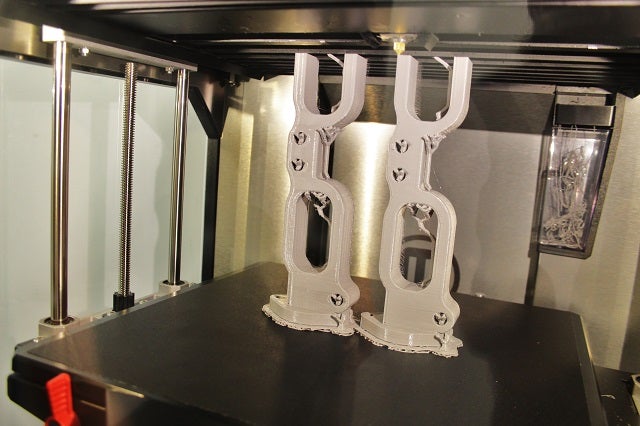
    To confirm the dimensions and design of our prototype, we decided to utilize some of our rapid prototyping tools. We fired up our 3D printer and loaded the model. Check out a couple images showing the progress of the print.

    3D-printing 2015 WRX parts
    3D-printing 2015 WRX parts

    3D-printing 2015 WRX parts
    3D-printing 2015 WRX parts

    Once the printing process was complete, we cleaned up the prototypes and installed them on our 2015 WRX to verify fitment.

    3D-printed 2015 WRX parts
    3D-printed 2015 WRX parts

    3D-printed 2015 WRX TGV delete installed
    3D-printed 2015 WRX TGV delete installed

    You will notice these prototypes include a rear flange to attach to the TGV solenoid. We experimented with a design that retains the flange, in order to bolt the stock solenoids in place for visual inspection purposes. After evaluating this setup, we decided the flange was unnecessary and removed it from the design. Our two functional prototypes will be more similar to our original 3D models.

    Coming up - Functional Prototypes

    With fitment confirmed, we began working up a couple functional prototypes for product

    Continue Reading »
  7. Power Through Deletion. 2015 WRX TGV Delete Kit, Part 1: Design and 3D Prototypes

    Power Through Deletion. 2015 WRX TGV Delete Kit, Part 1: Design and 3D Prototypes

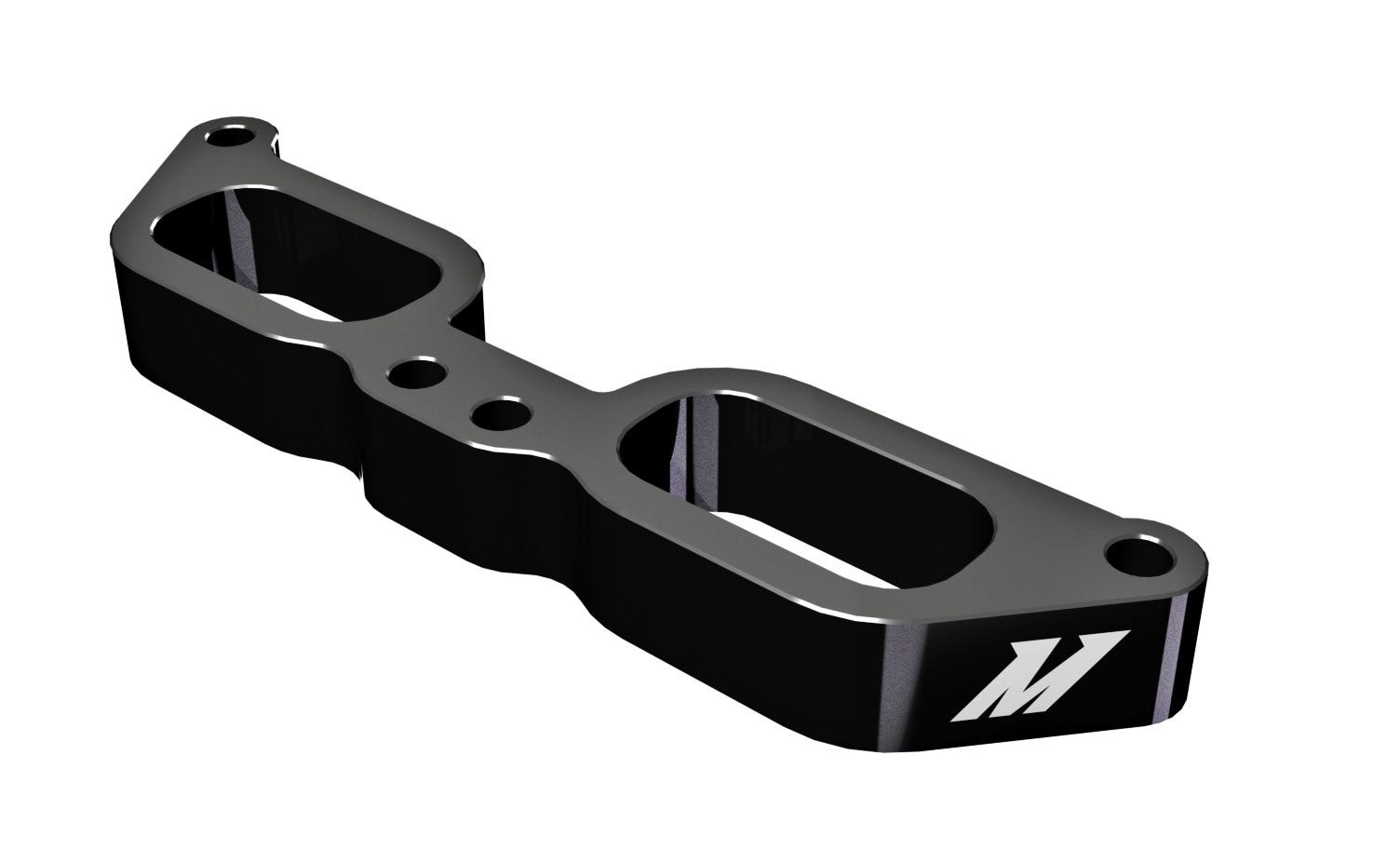
    It's been nearly two years since our first 2015 WRX development vehicle rolled into the shop. We've had a lot of fun with the car, and our team has developed a multitude of awesome components to aid in cooling, elevate power, and improve styling. Our product line is essentially complete, meaning we are done wrenching on our WRX. This is bitter sweet, as we will be picking up another vehicle to start the process once again. Before shipping out the WRX, we had one more project up our sleeves to extract a touch more power.

    With our existing modifications, including our downpipe, intake, and cat-back exhaust system, most customers are making in the neighborhood of 290 whp and 310 wtq. Not bad for some simple bolt-on modifications and ECU tuning. We've been eyeing TGV modifications and have seen the impressive effects on Subarus from previous model years. We decided to open up the intake system on our 2015 to see if we could design a delete system that would deliver a few extra ponies.

    Stock

    Continue Reading »
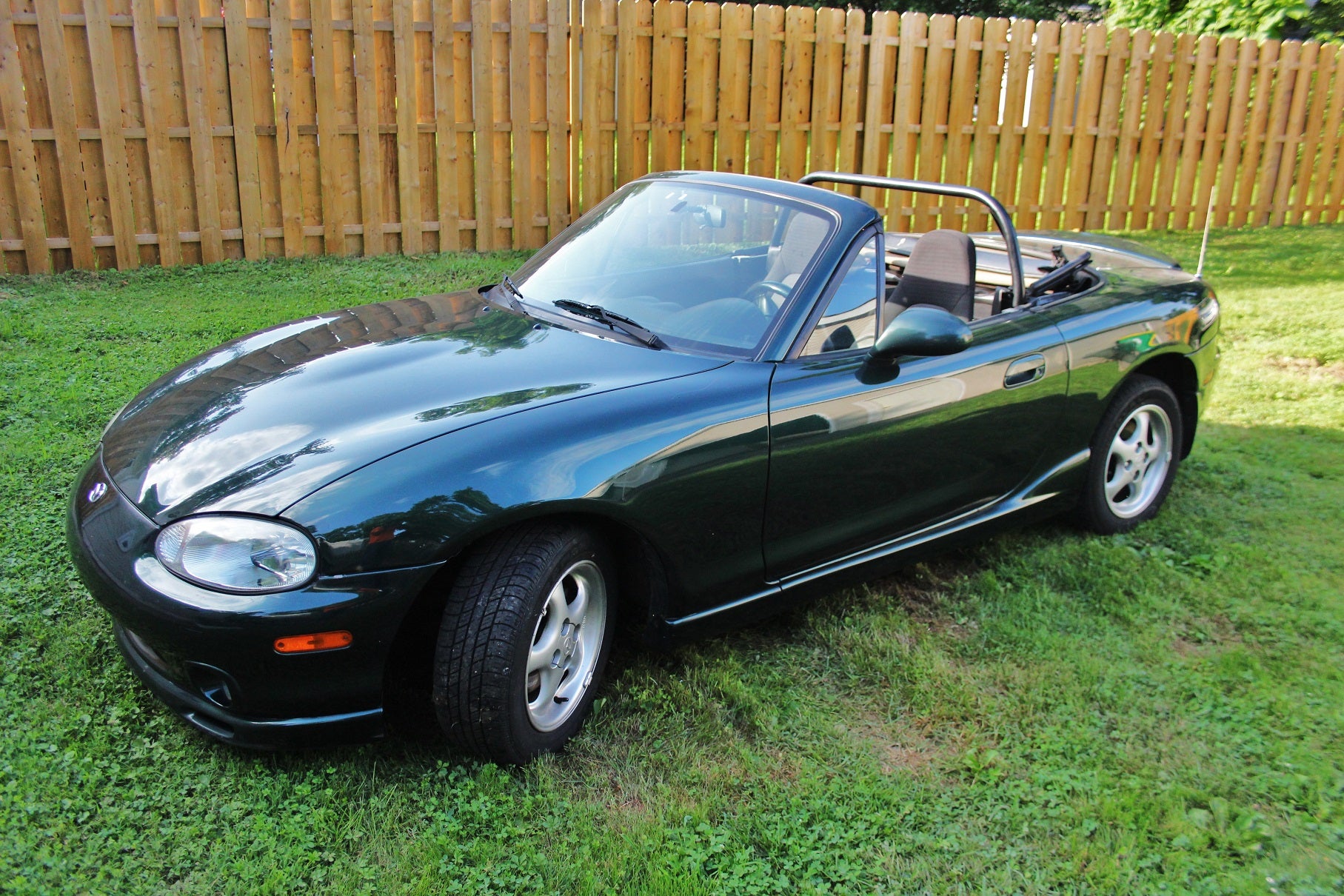
  8. Mazda Miata NB Oil Cooler R&D, Part 4: On-Road Testing

    Mazda Miata NB Oil Cooler R&D, Part 4: On-Road Testing

    Interested in picking up our NB Miata oil cooler kit? Check out our discounted pre-sale linked below.

    Mishimoto 1999-2005 Mazda Miata Oil Cooler Kit Pre-Sale!

    Our idle warmup provided a nice baseline test to evaluate the benefit of the stock liquid-to-liquid oil cooler. From what we saw in the conditions of our first test, warmup is not greatly affected by this component. In this second portion of product testing, we will be evaluating the impact of this heat exchanger on cooling performance. More importantly, we will be evaluating the cooling benefits of our liquid-to-air cooler.

    Testing Plans

    Variations

    • Stock liquid-to-liquid heat exchanger
    • Mishimoto oil cooler setup
    • Mishimoto oil cooler setup plus stock liquid-to-liquid heat exchanger

    By testing the Mishimoto oil cooler both with and without the stock heat exchanger, we can determine if this piece is helping reduce temperatures, or if the coolant temperatures are causing a rise in oil temperatures. This conclusion will allow our team

    Continue Reading »
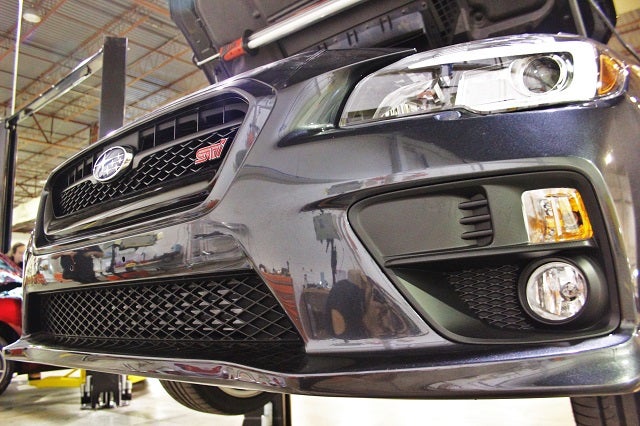
  9. Dropping Intake Temps. 2015 STI FMIC R&D, Part 1: Core Fitment and Piping Plans

    Dropping Intake Temps. 2015 STI FMIC R&D, Part 1: Core Fitment and Piping Plans

    We've given the 2015 WRX quite a bit of love, mostly due to the introduction of the FA20DIT within the new chassis. Our team developed a ton of awesome components: a downpipe, an intake system, a couple different intercooler options, and various other neat parts. With our WRX projects mostly wrapped up, it's time to turn our attention towards the STi. It still has an EJ engine under the hood, but it is mated to a new chassis that many are taking advantage of in various forms of competitive racing.

    So far we have developed an intake and a cat-back exhaust for the STI. Our next target is a bolt-on front-mount intercooler (FMIC) kit for the 2015 STI. The EJ25 is a well-respected engine that can make great power from basic bolt-ons and tuning. In addition, the sky is the limit in terms of power output once engine internals are upgraded and a large snail is bolted up. Greater power means more heat, resulting in the need for a more efficient heat exchanger for the charge-air system. Thus, we

    Continue Reading »
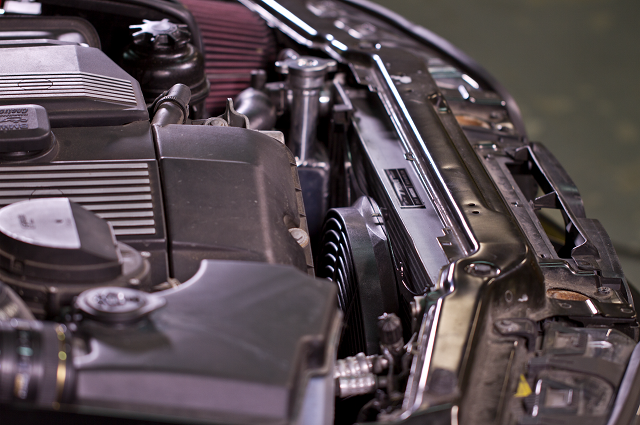
  10. BMW 3-Series E46 Electric Fan R&D, Part 2: Prototype Testing

    BMW 3-Series E46 Electric Fan R&D, Part 2: Prototype Testing

    Interested in picking up this awesome E46 fan setup? Check out our discounted pre-sale linked below!

    Mishimoto BMW E46 Non-M Performance Fan Shroud Kit Pre-Sale

    Functional Prototype

    In a short timespan we were able to turn our 3D models into an actual functional prototype. Check out a couple images of our first BMW E46 fan shroud!

    Mishimoto prototype E46 parts
    Mishimoto prototype E46 parts

    Mishimoto prototype E46 parts
    Mishimoto prototype E46 parts

    As previously noted, we are using our 16" electric slim fan with this kit. This fan produces 1,850 CFM of air and has been used successfully in both our E46 M3 and E36 electric fan kits.

    Mishimoto prototype E46 parts
    Mishimoto prototype E46 parts

    Quite a sleek design!

    Product Testing

    The at-speed benefits of this shroud are undeniable, but we still need to conduct idle testing to ensure that our electric fan is up to the task of cooling the E46. To do so, we set up a long-duration idle test to evaluate the performance of our electric fan against the stock unit.

    Testing Conditions

    • Engine at Idle
    • Hood closed to replicate on-road conditions
    Continue Reading »